
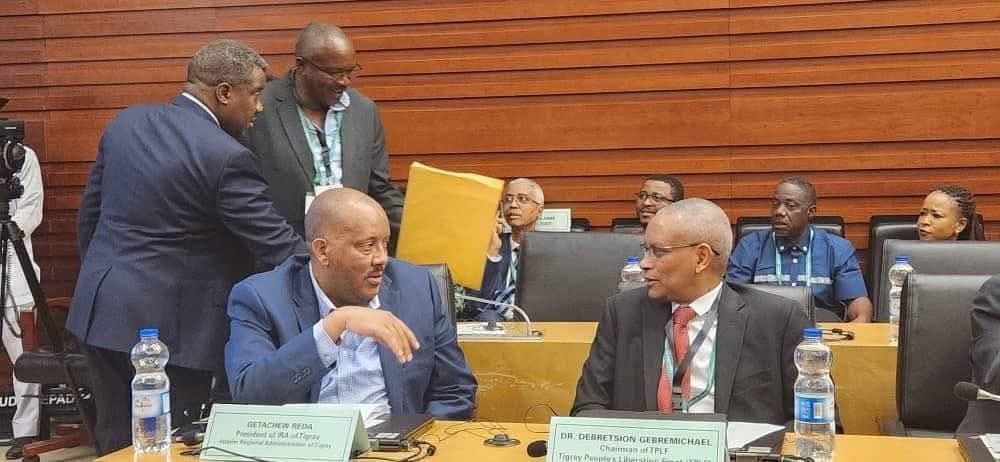
Regarding the implementation of the Pretoria Peace Agreement, titled “What Can We Learn from the Agreement?”, a discussion was held on February 16, 2025, hosted by the African Union.
VOA reported that the outgoing Chairman of the African Union Commission, Moussa Faki Mahamat, who was among the speakers at the forum organized by the African Union, said, “This agreement will be a lesson for our efforts to achieve peace throughout Africa.”
The President of the Tigray Regional Interim Administration, Getachew Reda, who signed the agreement on behalf of the TPLF, said, “Many of the contents of the agreement have not been implemented,” and asked the African Union and the international community to pay attention to the points that “have not been implemented.”
Among them, he emphasized, is the issue of displaced persons and the disarmament, demobilization , and reintegration of ex-combatants (DDR). He added, “The international community is only paying attention to the issue of disarmament,” but the issue of rehabilitating these militants should not be forgotten.
“While we are speaking here, many women and children are suffering in shelters,” he said, adding that the international community and the African Union should pay attention to the issue of the return of internally displaced persons to the territories that are constitutionally part of Tigray.
TPLF Chairman Debretsion Gebremichael (Dr.), who was another participant from Tigray, also said, “Although the agreement to end the war is a great success, there are still issues that need to be addressed.” According to a Tigray Television report, Dr. Debretsion stated that the Tigray territories confirmed by the constitution must be returned, armed forces other than the national defense army must leave the areas, displaced persons must return to their villages, and the legal entity of the TPLF must be reinstated.
Dr. Debretsion stressed that the signatories of the agreement need to show accelerated action and unwavering commitment. He also added that monitoring and verification methods should be strengthened to ensure the implementation of the agreement and to create trust among stakeholders. “At this critical juncture, the continued involvement of the African Union and the international community is essential,” he said.
Representatives of the signatories, as well as the negotiators, participated in the discussion. One of the officials who participated in the Pretoria negotiations on behalf of the Ethiopian government, Minister of Foreign Affairs Dr. Gedion Timotheos, explained that the Ethiopian government is taking steps to implement the agreement. He said that the unfulfilled points of the agreement “must be continued in a manner that respects the law.”
Ethiopian Foreign Minister Dr. Gedion Timotheos emphasized the need to protect the peace agreement from insiders and outsiders who want to destroy it, according to information from Tigray Television. Dr. Gideon is reported to have urged all parties to be committed to the principles outlined in the Pretoria Agreement.
In addition, the Pretoria peace process highlights the principle of “African solutions to African problems,” said the chief negotiator, former Nigerian President Olusegun Obasanjo. “It shows that African institutions can resolve conflicts on the continent and bring peace,” he said.
Furthermore, Olusegun Obasanjo said that contrary to the provisions of the agreement and the constitution of Ethiopia, “Contested areas must remain neutral until the issue is resolved.” He added, “They should not affect the implementation of the agreement.” This statement does not take into account the more than one million IDPs from West Tigray and other territories of Tigray that were invaded by Eritrea, which renders the Pretoria Agreement meaningless.
This means that the IDPs who are dying every day of hunger and disease will continue to do so. So, what is the point of Pretoria if it doesn’t end this suffering and death? This question continues to be asked by many.
Leave a Reply
You must be logged in to post a comment.