
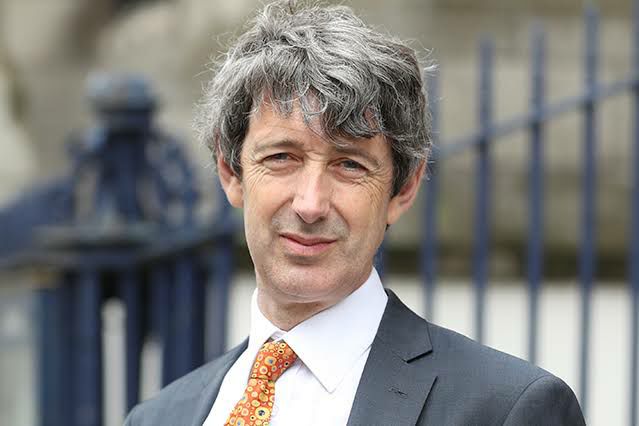
A Reflection on Alex de Waal’s Recent Interview with Shushay Adane.
By Ghenet Gebru,
Before I delve into my reflections and critique, allow me to express my sincere appreciation and profound respect for Professor Alex de Waal—an exceptional voice of moral clarity and courage since the eruption of the genocidal war against Tigray in November 2020. A few international scholars have demonstrated such steadfast dedication to truth and justice as he has. From the earliest days of the all-out war and suffocating siege—when silence, denial, and distortion dominated global narratives—Professor de Waal’s voice rose above the noise with reason, integrity, and an unwavering sense of human empathy. His forthright critique of injustice and his persistent engagement with the international community have shed invaluable light on both the scale and the deliberate intent behind the atrocities committed against the people of Tigray.
In his recent interview with Armamedia, hosted by Shushay Adane, Professor de Waal once again offered remarkable insight—especially in his precise and articulate clarification of what constitutes genocide. His explanation was not only academically rigorous but also morally compelling. He laid out, with legal and historical clarity, that genocide is defined not merely by the number of lives lost but by the intent to destroy a people, in whole or in part, through acts of mass killing, starvation, sexual violence, and systematic destruction of their means of survival. His remarks left no room for equivocation or denial: the atrocities committed against Tigrayans meet the definition of genocide.
At a time when certain international actors and opportunistic voices continue to minimize or distort the magnitude of the crimes committed against the people of Tigray, Professor de Waal’s account of the war stood out as both necessary and genuinely courageous. He reminded the world, with scholarly precision and moral conviction, that the destruction of Tigray’s infrastructure, health care systems, and schools; the cruel and systematic use of sexual violence; the weaponization of hunger; and the deliberate targeting of civilians were not unfortunate byproducts of war—but calculated instruments of genocide. For this, he deserves all Tigrayans utmost gratitude and enduring respect. His intervention not only reaffirmed the lived experiences of millions of Tigrayans but also reignited the moral and legal imperative to pursue justice and hold the perpetrators accountable for one of the darkest chapters in recent history
That said, while I deeply appreciate Professor de Waal’s powerful and principled exposition on genocide, I found certain remarks he made regarding the TPLF to be both unfortunate and analytically misplaced. In the interview, he asserted that the “TPLF leadership must depart,” criticizing the party for allegedly failing the people and becoming detached from those it claims to represent. He also referenced allegations implicating the TPLF in illicit gold mining activities.
Such claims, however, fall short of the depth and rigor that typically characterize Professor de Waal’s scholarship. His statements oversimplify the complex realities of Tigray’s post-war political terrain and, perhaps unintentionally, echo the propaganda narratives carefully engineered by those seeking to dismantle the TPLF leadership and, by extension, extinguish the organized political voice of Tigray. Reducing the TPLF’s role to that of a political obstacle not only disregards its historical and ongoing contributions to Tigray’s survival but also risks legitimizing the very disinformation campaigns that have long aimed to fracture Tigray’s unity.
To begin with, it is the government of Mr. Abiy Ahmed—not the TPLF—that has consistently obstructed the implementation of the CoHA. I strongly believe this not to be difficult for Prof. de Wall to understand. Since the signing of the CoHA, the TPLF has repeatedly appealed to the African Union, mediators, observers, and the broader international community to intervene, as the government of Mr. Abiy Ahmed has shown no interest, commitment or willingness, whatsoever, to fulfill even its most basic obligations under the agreement.
Mr. Abiy Ahmed has deliberately resisted reinstating Tigray’s territorial integrity to its pre-war status, ensuring the safe and voluntary return of IDPs, and pursuing justice and accountability for the atrocities committed. In addition, the government of Abiy Ahmed refuses to reinstate TPLF’s legal status. Instead, his regime has invested its resources in corrupting some of its members and other Tigrayan politicians, fostering divisions, and manufacturing proxy actors within Tigray—all designed to fracture the region’s unity and dismantle the TPLF, the only political force Mr. Abiy Ahmed gravely fears.
The TPLF’s role in Tigray’s political reorganization since the CoHA’s signing cannot be dismissed or distorted. It has been actively engaged with the people through community assemblies, consultative forums, and regional conferences—open platforms where citizens have voiced their frustrations, criticisms, and hopes.
I concur with Professor de Waal on certain points about what the TPLF might have done differently before the war. However, once the party voluntarily relinquished federal power and relocated its center to Mekelle, events unfolded with astonishing speed—far faster than any reasonable person could have anticipated—and the political landscape began collapsing almost overnight. Abiy Ahmed, working hand in hand with both internal and foreign collaborators, moved aggressively to eliminate any political force capable of challenging his so-called “change/reform” agenda— which, in reality, was a calculated project to entrench himself as an unchallenged ruler in the 21st century. As you rightly noted, the people of Tigray gave the TPLF the benefit of the doubt, recognizing the existential danger that was rapidly unfolding, and they played an indispensable role in resisting the campaign of annihilation waged against them.
What Professor de Waal seems to understate, however, is the decisive role of political leadership in that resistance. The TPLF’s political networks and communication structures were crucial in organizing, mobilizing, and unifying the population at a moment of unprecedented peril. It is inconceivable that a society—no matter how resilient—could have withstood a genocidal campaign of such magnitude without structured leadership, coordination, and
experience. The TPLF’s organizational and leadership capacity, political discipline, and war-hardened experience were central to Tigray’s survival. To overlook this reality is to echo a narrative designed by that intent on erasing the TPLF’s historical role and extinguishing its political legacy.
I also concur with Professor de Waal that the TPLF must return to the people and restore its bond of trust with them. It should end any perception of operating in secrecy and instead revive its longstanding practice of open consultation and participatory decision-making. However, his characterization that the TPLF “fell right into the lap of the enemy”—referring to Abiy Ahmed and Isaias Afwerki—strikes me as a biased generalization that overlooks the complexity of the post-war political context. Indeed, the period immediately following the signing of the Pretoria agreement saw the political situation in Tigray unravel at an alarming pace. My educated guess has been that the central element of the CoHA was the intent to dismantle the TPLF from within—much as the EPRDF was dismantled. Tragically, a few splinter members of the TPLF, both active and veteran, appear to have turned their backs on their people and aligned themselves with Abiy Ahmed’s regime, participating in efforts to weaken and delegitimize the TPLF.
Paraphrasing what Professor de Waal has noted, Abiy Ahmed thrives on creating confusion and consolidating power through manipulation. He has aggressively weaponized money to buy the loyalty of certain Tigrayan elites, who in turn have betrayed their allegiance to their people. His policies have deliberately impoverished Tigray, reducing a
proud and self-reliant nation to one forced into humiliation. The result is a tragic distortion of Tigray’s once vibrant political and economic spirit—a people pushed into beggary by design.
I concur with the notion that the TPLF must indeed go back to its roots—back to the people. It must rely on the wisdom, consultation, and collective judgment of the Tigrayan people to rebuild trust and chart a new course. The people have already shown their capacity to guide, correct, and strengthen their leadership in times of crisis. What is required now is the humility to listen, the courage to reform, and the foresight to organize a genuine political process that allows the people to speak freely and define their future. The existential threat that once came from outside is now both external and internal—and only through genuine people-centered leadership can Tigray navigate this perilous moment.
I completely agree with Professor de Waal’s assessment of the CoHA. As he aptly stated, “the peace agreement is a pretty shady document… I understand why they signed it—it was the least bad option on the day—but it is full of flaws: no proper monitoring mechanism, no clear appeal procedures, and no institutionalized steps…” for implementation.
Indeed, this deeply flawed agreement has become the root cause of much of the political crisis, division, and mistrust among the people of Tigray. It created fertile ground for conspiracies and manipulation—especially regarding the return of internally displaced persons (IDPs). I personally witnessed one Tigrayan individual affiliated with a splinter group publicly stating in the media that IDPs should not return to their homes while the TPLF remains in power. The interviewer, visibly shocked, asked, “How can you, as a Tigrayan, say this? Isn’t it the people of Tigray you claim to advocate for?” The individual, unable to contain his anger retorted, “Are you TPLF?”
This one scenario of exchange revealed the depth of the conspiracies aimed at prolonging Tigray’s suffering, hoping that despair and frustration would turn the people against the TPLF. Yet, that scheme failed—the people of Tigray proved far more discerning, critical, and farsighted than those plotting against them had anticipated.
Thus, paraphrasing, what I don’t agree with the professor on is his statement: “…the people undoubtedly will say to these leaders, five years ago you failed… We gave you the benefit of the doubt because of the existential threat the people would face… It wasn’t the time for second guesses on leadership… I have no doubt that the people of Tigray, ordinary people, I am absolutely confident, will understand if given the opportunity to speak … they will begin to know… The first thing is the current TPLF leadership must depart….” I find this stance unhelpful and counterproductive to resolving Tigray’s ongoing crisis. There is no one better than Professor de Waal to understand
the intricate conspiracies and political machinations that have unfolded in the post-CoHA period.
Yet the TPLF has, and continues to, bear the heavy burden of cleaning up the chaos engineered by Abiy Ahmed, who has weaponized money to manipulate, divide, and weaken Tigray’s political structure and social cohesion. Any impartial observer with firsthand knowledge would recognize that Abiy will rest only when the TPLF is utterly
destroyed. He is ruthlessly exploiting every lever of power to crush Tigray.
To call for the TPLF leadership to step aside at this moment is not merely misguided—it is to hand Abiy Ahmed a golden opportunity to advance his cruel, ill-fated scheme to annihilate Tigray, undo its hard-won self-rule rights, and strip the people of their political agency.
Professor de Waal condemned the TPLF for allegedly abandoning its historically established practice of holding community consultations, public forums, and regional conferences—mechanisms designed to ensure that the concerns and aspirations of the people are heard. I fear that this assessment may reflect a lack of full information.
As a matter of fact, the TPLF leadership has devoted significant time and energy over the past two more years to engaging with the people, maintaining exactly the longstanding practice Prof. de Wall asserted. Yet, some stubborn individuals who intend to undermine TPLF refuse to acknowledge these public interactions as legitimate or relevant.
To them, only a narrow group of educated elites counts as “worthy” people, while ordinary citizens meeting with the TPLF are dismissed or ignored.
Make no mistake: throughout its struggle, the TPLF has consistently met with the people it represents-majority the peasants. What may have changed is not TPLF’s commitment to engagement, but the composition of Tigray’s population—today, there are more educated elites than during the time of 17 years of struggle. Yet the majority of
the population remains the same, and the TPLF continues to consult with all segments of society, not only the educated few. Guided by this approach, over the past few years, the TPLF has taken decisive steps toward internal leadership renewal and expanded grassroots participation.
These initiatives represent a sustained effort to restore public trust and strengthen the bond among the people. To date, by consistently engaging the public, the TPLF has weathered wave after wave of political crises and successfully thwarted Abiy Ahmed’s hapless attempts to fracture Tigray’s political structure, annihilate its people, and force them to relinquish their hard-won rights to self-rule.
Yet, certain individuals determined to undermine the TPLF refuse to recognize these interactions as legitimate or meaningful. In their view, only a small circle of educated elites qualifies as “worthy” participants in decision making, while the broader population engaging with the TPLF is dismissed or ignored. It is reasonable to hope that Professor de Waal, given his rigorous scholarship and principled approach, would not accept this narrow, elitist perspective—what might rightly be called “elite snobbery”—as a valid measure of the TPLF’s accountability or responsiveness.
It is critical to situate the accusations that the TPLF is “conspiring with the federal government” in their proper context. While a small splinter faction has been seen working and campaigning against the interests of their people, the legitimate TPLF leadership has consistently pursued peace through genuine political dialogue and negotiation—not only with Abiy Ahmed’s government but also with other regional actors, including Eritrea, Amhara, and Afar.
These efforts occur in a context where the CoHA has been systematically violated by Abiy Ahmed’s regime and its allies. To portray the TPLF as a conspirator with the federal government is not only misleading but also distorts reality, ignoring the stark asymmetry of power and the persistent obstruction orchestrated by federal actors and their collaborators. The TPLF is resisting these external pressures to protect Tigray’s political agency, unity, and survival—not colluding with those who seek its destruction.
The federal government has effectively weaponized the CoHA as a political trap—designed not to advance peace, but to delegitimize the TPLF, render it politically irrelevant, and replace it with a proxy entity molded in Abiy Ahmed’s image. Such an objective, however, is fundamentally unattainable as long as the TPLF remains alive and resilient, continuing to embody the political will and aspirations of the Tigrayan people.
As for the claims of “illicit gold mining and human trafficking,” such statements echo narratives that have been amplified by anti-TPLF media outlets and political adversaries whose agenda is to discredit it. While corruption and resource mismanagement should never be dismissed wherever they occur, broad and unsubstantiated accusations risk conflating rumor with evidence. A fair and responsible analysis must differentiate between propaganda aimed at demonizing a political organization and verifiable facts established through credible investigation. It was unfortunate that Professor de Waal chose to invoke such unfounded allegations at a time when baseless claims and political finger-pointing have become routine. In particular, TPLF’s splinter group has repeatedly weaponized such accusations to discredit senior military generals who stood against their agenda, using the same narrative to tarnish the TPLF’s reputation as a whole.
In this context, simply asserting that something is a “widely known fact” is wholly inadequate—especially coming from a scholar of Professor de Waal’s stature, whose words carry considerable influence and whose credibility rests on evidence, not hearsay or politically motivated rumor.
Another issue is the Professor de Waal’s characterization of Getachew Assefa’s appointment to the TPLF’s Central Committee, which he described as “a terrible message”—arguing that appointing “the most hated and corrupt man in Ethiopia, hated with reason” signaled “complete disrespect to the sentiments of the people and the direction of democracy.” This interpretation, however, reflects an external perception that overlooks the complex political realities within Tigray. While opinions about individual leaders inevitably vary, reducing the TPLF’s leadership decisions to such a sweeping moral judgment risks echoing narratives shaped by misinformation and propaganda.
The campaign to vilify Getachew Assefa has been orchestrated largely by the very actors who have driven Ethiopia from one crisis to another—hardly credible voices on matters of integrity or governance. His appointment should instead be understood within the broader context of institutional continuity, security imperatives, and the urgent
need for experienced leadership during a period of profound instability. Getachew’s background in intelligence and governance equips him with the strategic discipline necessary to confront the existential threats facing Tigray, both internally and externally. Ultimately, questions of leadership legitimacy in Tigray must be determined not by external observers or partisan critics, but by the collective will and judgment of the Tigrayan people themselves. To label his appointment a “terrible mistake” without accounting for these realities oversimplifies a deeply complex situation and inadvertently reinforces the external biases that have long undermined Tigray’s right to political agency.
Thus, it is neither accurate nor fair to claim that the TPLF has turned its back on the people. In reality, it continues to operate under immense pressure and complex humanitarian and political constraints imposed by the very actors who seek its destruction. The party’s resilience in such conditions is not evidence of isolation—it is evidence of survival, adaptation, and a continuing commitment to represent the will and welfare of the people.
It is regrettable that Professor de Waal, a scholar known for his meticulous research and sensitivity to complex African political realities, may have been influenced by the coordinated disinformation campaign targeting the TPLF. Certain elites—both within and outside Tigray—have invested heavily in constructing a narrative that portrays the TPLF as an obsolete, conspiratorial force detached from the people. In truth, many of these individuals represent a new kind of elitist snobbery: they claim to speak for “the people” while dismissing the actual voices of farmers, soldiers, mothers, and youth who continue to engage with the TPLF as the only organized structure capable of defending Tigray’s existence and political rights.
The TPLF is far from perfect; it has made mistakes, some of them grave. But to argue that it should “go” without recognizing its historic and current role in safeguarding Tigray’s survival is intellectually inconsistent and politically naïve. The people of Tigray, not external commentators or political adversaries, have the sovereign right to determine their leadership and political path. Genuine democracy demands that such decisions arise from within, through free dialogue and reform, not through pressure shaped by propaganda or external disillusionment.
In conclusion, while I honor Professor de Waal for his profound moral stance on the Tigray genocide and his enduring solidarity with the people, I must also assert the need for balance and context when assessing Tigray’s internal politics. Critique is healthy, but it must be grounded in fairness and evidence, not in the recycled narratives of those who wish to see Tigray weakened from within. The TPLF remains a central pillar of Tigray’s political identity and resilience. To demand its disappearance is, knowingly or unknowingly, to advance the very project that Abiy Ahmed and his accomplices have pursued since November 2020—the disempowerment of Tigray and the silencing of its collective voice.
Leave a Reply
You must be logged in to post a comment.