
By Justice for the voiceless,
This call is not driven by emotion, revenge, or despair. It is driven by responsibility. The survival of Tigray and the dignity of the Tigrayan people demand clarity, unity, and strategic action. History has taught us a painful lesson: silence without strength invites destruction, while noise without leverage achieves nothing. What is required now is disciplined revival political, social, economic, and moral.
The genocide against the people of Tigray was not an accident, nor the result of misunderstanding or spontaneous conflict. It unfolded with knowledge, tolerance, and in some cases approval from powerful international actors. Testimony by former Finnish Foreign Minister Pekka Haavisto in June 2021 referenced statements attributed to Ethiopian leadership expressing intent to eliminate Tigrayans or push them “150 years back.” International narratives reinforced by selective condemnations such as former U.S. Secretary of State Mike Pompeo’s November 2020 framing of the conflict contributed to the paralysis of the UN Security Council despite overwhelming evidence of mass atrocities. The message was unmistakable: sympathy exists, but protection follows interests, not morality.
The purpose of the genocide was clear to permanently weaken Tigray and remove it from political, economic, and strategic relevance in the region. This objective was executed through a coordinated strategy that combined mass violence with systemic destruction. Civilians across generations were targeted. Economic infrastructure was looted and dismantled. Political fractures were deliberately engineered. Trust in leadership was eroded. At the center of this strategy was a comprehensive humanitarian, economic, and financial blockade. Food, medicine, fuel, electricity, telecommunications, banking services, and cash flow were deliberately restricted. This blockade was not a side effect of war; it was a central instrument of genocide, weaponizing starvation and deprivation to break society from within.
Alongside physical and economic destruction came a calculated campaign of social and psychological warfare. Youth were systematically forced into migration through engineered hopelessness siege conditions, unemployment, insecurity, and the collapse of opportunity. This fueled illegal human trafficking networks and exposed young people to exploitation, detention, and death. The deliberate tolerance of alcohol, drugs, and social decay in an already traumatized society further numbed resistance and stripped youth of dignity and direction. Joblessness became a weapon. Hope became a threat.
At the same time, the values that sustained Tigray through generations—sacrifice, resistance, and sovereignty were deliberately undermined. Veterans who defended the people were rendered invisible and treated as burdens rather than pillars of society. Their sacrifices were devalued, their morale crushed, sending a dangerous message: defending your people leads only to abandonment. This is how societies are defeated without constant warfare by killing morale itself.
These efforts did not end with ceasefires or the Pretoria Agreement. There remains an ongoing and deliberate attempt to weaken peace, security, the TPLF, and the Interim Administration of Tigray through political isolation, economic strangulation, security constraints, and continued territorial occupation. Under the banner of “peace,” forces hostile to Tigray are harbored and legitimized particularly in Afar while Tigrayan institutions are constrained and delegitimized. This is not neutral mediation; it is asymmetrical containment.
Meanwhile, others benefited from the war. Eritrea gained renewed strategic importance. The Prosperity Party consolidated political and economic power under the language of stability. OLF and Fano emerged stronger after the collapse of EPRDF. The Pretoria Agreement weakened Tigray more than any other actor. No one paid a higher price, yet many are comfortable with Tigray being permanently sidelined.
Yet the world must also be reminded of an inconvenient truth: a strong Tigray once played a central role in regional and continental stability. During periods when Tigrayan leadership despite internal corruption was strong and strategically oriented, Ethiopia contributed meaningfully to peacekeeping and stabilization efforts in Rwanda, Sudan, and Somalia. Ethiopia’s economy experienced sustained double-digit annual growth, lifting millions out of poverty. Ethiopian leaders stood at G20 and global summits, advocating not only for Ethiopia, but for African interests against far more powerful states and institutions.
That era demonstrated something critical: when Tigray was strong, the region was more stable.
Today, by contrast, corruption, betrayal, and shortsighted leadership within the TPLF’s and allied parties failures and among Ethiopian political elites who aligned with external and internal adversaries have brought Ethiopia and its people to their knees economically, diplomatically, and strategically. The country is weaker, more fragmented, and less respected. The region is less stable. Africa’s voice is diminished. This collapse did not come from Tigray’s strength it came from its destruction.
This reality leads to an unavoidable truth: the choice before Tigray is binary. Either sovereignty and security are restored, or permanent vulnerability becomes our future. This will not be achieved through goodwill from adversaries, neighbors, or international actors whose priority is stability over justice. Sovereignty is not granted it is enforced.
History consistently shows that legitimacy follows power, not the other way around. Diplomatic recognition and negotiation space come after credible security, territorial control, and deterrence are established. Strength is not the enemy of peace; it is its precondition. Without leverage, negotiation becomes surrender. Without sovereignty, peace becomes temporary. Without power, justice becomes symbolic.
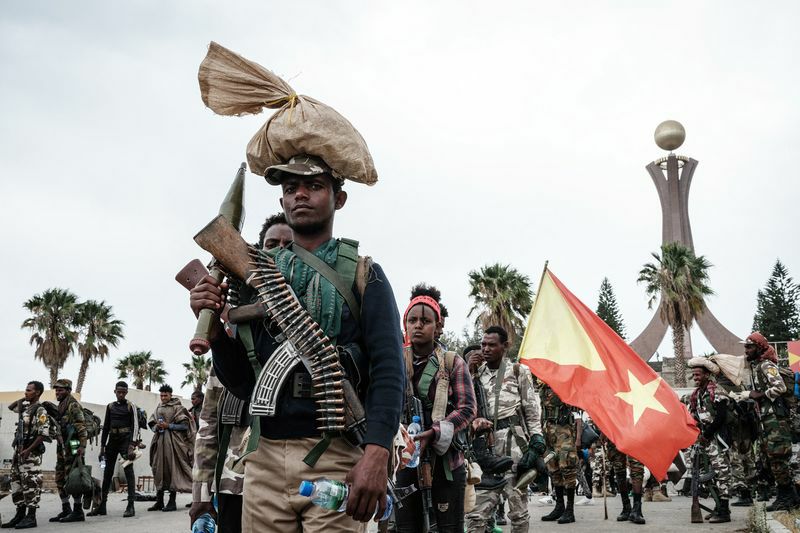
Reclaiming occupied territories must therefore be an immediate priority for the Interim Administration of Tigray, the TPLF, and the TDF. This is not a call for endless war. It is a call for survival. Territorial control restores leverage, enables regional alliances, allows internally displaced people to return home, rebuilds economic self-reliance, strengthens security, and creates real conditions for justice for victims of genocide and sexual violence.
At the same time, this revival demands responsibility from all Tigrayans, inside Tigray and across the diaspora. We must consciously reject destructive agendas transmitted by our enemies to divide us, exhaust us, and turn us against one another. Disinformation, internal hostility, and hopelessness narratives are weapons. Accepting them only prolongs our weakness.
Tigrayans must reclaim their historic role as leaders of peace, stability, and economic prosperity in the region, just as our parents and grandparents once did. For generations, Tigray produced disciplined leaders, administrators, educators, traders, and defenders who understood that peace and strength are not contradictions. True peace is not begged for it is led.
The revival of Tigray is therefore not only about resisting destruction; it is about restoring purpose. A united, sovereign, economically viable, and strategically conscious Tigray can once again become a pillar of regional security, a center of productivity and trade, and a credible voice for peace and African dignity on the global stage.
Peace without sovereignty is temporary.
Negotiation without leverage is surrender.
Justice without power is symbolic.
But peace led by a strong, united, and revived Tigray is durable for its people, for Ethiopia, and for the region.
This is the call.
This is the responsibility.
This is the path to revival.
Leave a Reply
You must be logged in to post a comment.