
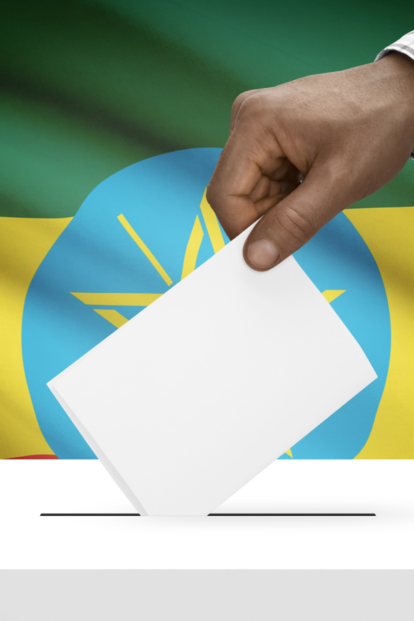
Ethiopia’s Electoral Board Excludes 46 Constituencies from June 1 Vote
— The National Election Board of Ethiopia (NEBE) has announced that elections will not take place in 46 constituencies during the country’s upcoming seventh general election, scheduled for Monday, June 1, 2026.
According to the board’s press release issued Tuesday, elections will not be held in eight constituencies in the Amhara region and 38 constituencies in the Tigray region. The Amhara constituencies excluded are located in South Gondar, West Gondar, Ambassel, and Dega Damot.
Board Chairperson Melateworq Hailu explained that the eight Amhara constituencies will be allowed to vote at a later date, though no timeline was provided. She also confirmed that six political parties have been excluded from the race, leaving 42 parties competing nationwide.
The parties barred from participation include three Tigray-based groups — Simret, Kanchi Haki, and Tnsae 70 Enderta — along with the Ethiopian Social Democratic Party (ESDP), the Sidama Federalist Party (SFP), and the Gambella People’s Liberation Movement. Melateworq further disclosed that more than 10,400 candidates registered for the election.
However, 80 candidates from nine parties were disqualified for failing to meet registration requirements within the deadline. The ESDP contested this figure, stating that 309 of its candidates were excluded by a court ruling after registration and certification.
The board clarified that the two figures are unrelated: 80 candidates were rejected for missing deadlines, while 309 ESDP candidates were disqualified through judicial decision.
NEBE also confirmed that the election will be monitored by both domestic observers and representatives from the African Union (AU) and the Intergovernmental Authority on Development (IGAD). The board noted that it had requested additional funding for election operations, and the chairperson announced that part of the request has been approved.
The election comes amid ongoing conflict in Ethiopia’s two largest regions, Amhara and Oromia, and heightened tensions in Tigray due to the stalled implementation of the Pretoria Agreement.
Meanwhile, the ruling Prosperity Party is contesting unopposed in most constituencies, particularly across Amhara and Oromia, in this seventh general election.
In Amhara, voting in eight constituencies was canceled because of the war involving Fano forces, which have wrested control from the federal government. In Tigray, elections in 38 constituencies were canceled due to the failure to implement the Pretoria Agreement, the unresolved constitutional status of the region, and the failure to restore Western Tigray in accordance with the FDRE Constitution and the Pretoria Agreement. This includes the failure to return internally displaced persons from Western Tigray, who fled during the 2020 Tigray war to escape atrocities committed by Eritrean soldiers, Fano militants, and federal troops.
Leave a Reply
You must be logged in to post a comment.