
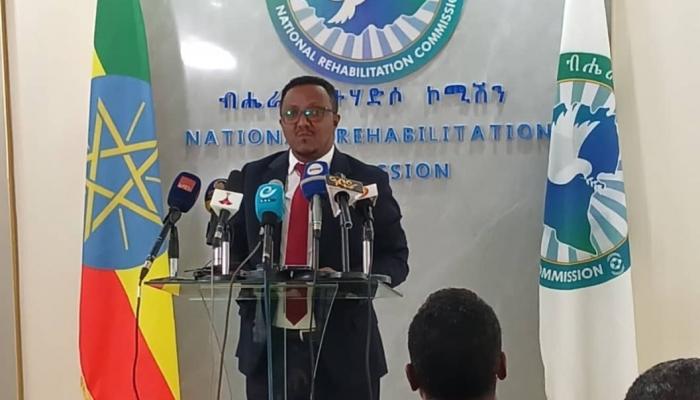
The National Rehabilitation Commission has declared that, in the initial phase within Tigray, 75,000 of the 274,000 militants will be demobilized and reintegrated into society. The commission has established programs and projects to complete the demobilization and rehabilitation of over 371,000 ex-combatants from seven regions, with a total cost exceeding $760 million over two years.
Funds for the initial round of demobilization have been secured from the government and donors from the government provided 1 billion Birr, while an additional $60 million was donated by seven countries. The European Union and the African Union have also offered financial and material support, with promises of further assistance from 12 countries.
During the preparatory phase, the commission, in collaboration with the Tigray regional interim administration and federal institutions, identified participants for the rehabilitation program and took over three demobilization centers. The first round of training will take place in Mekele, Edaga Hamus, and Adwa in the Tigray region, with plans to train 75,000 militants in four months.
Upon entering the centers, rehabilitation program participants will undergo a six-day rehabilitation period, including digital registration, psycho-social support, and civic training. Participants will also receive a reintegration fee and assistance in rejoining their communities to ease their transition back into society.
After two years since the start of the genocide war carried out by the Ethiopian government in Tigray, a ceasefire agreement was reached in Pretoria in November 2022. This agreement stipulated that the disarmament and rehabilitation of the army should take place in consideration of the security situation in Tigray.
Meanwhile, the National Reconstruction Commission has initiated this process while more than 40% of Tigray’s territories remain under the control of invading forces, namely Eritrean and Amhara forces. Millions of internally displaced persons (IDPs) remain unable to return to their homes and continue to live without assistance and basic services in various cities across Sudan and Tigray, with key elements of the ceasefire agreement still not implemented.
Since the signing of the agreement, IDPs have been urging the government through demonstration and other means to facilitate their return to their homes in accordance with the agreement. However, due to the Tigray regional government’s lack of pressure on implementation and the federal government’s failure to act, many IDPs have been unable to return to their villages.
Furthermore, the federal government has been accused of trying to alter the terms of the agreement by issuing undisclosed instructions, preventing the full implementation of the ceasefire agreement.
Leave a Reply
You must be logged in to post a comment.