
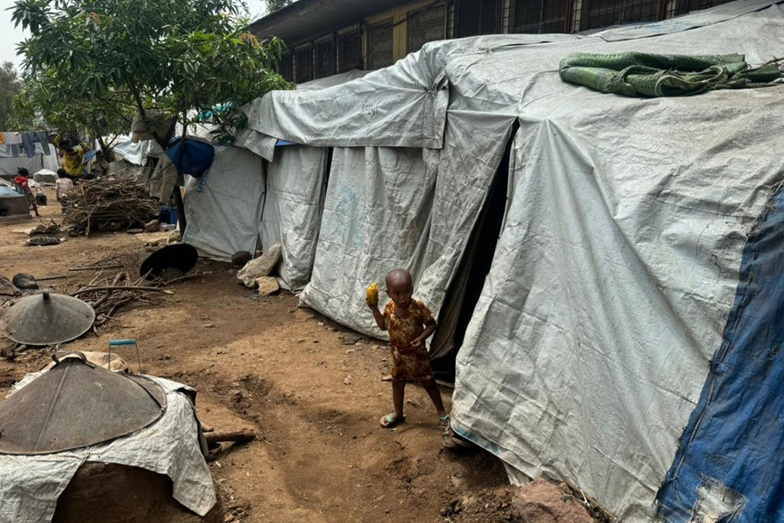
In a statement issued yesterday, April 6, 2025, the International Organization for Migration (IOM) reported that shelters across various areas of the Tigray region are severely overcrowded due to the growing number of displaced persons. According to the statement, not only are these shelters overwhelmed, but many are also at high risk of collapse, forcing displaced individuals to live under dire conditions.
“The number of displaced people in the shelters far exceeds their capacity, causing severe overcrowding,” the organization stated. “Each time new displaced individuals arrive; the pressure causes some shelters to collapse.”
The institution attributed the overcrowding to displaced people who previously rented homes within host communities in nearby towns being forced to move into shelters as they can no longer afford rent.
The report highlighted that the Northwestern Zone alone hosts 309,906 internally displaced persons (IDPs), accounting for 40% of Tigray’s total displacement, while the Central Zone hosts 196,229 IDPs, or 25.7%. Together, these two zones accommodate nearly 506,000 individuals, yet shelter capacity remains critically inadequate.
IDPs residing in shelters in areas such as May Hanse, Hitsats, Adi Mahameday, Adi Nebried, Tahtay Adyabo, and other locations in the Shire region are enduring “unsafe, unplanned, and deteriorating conditions.” The report emphasized that overcrowding has reached alarming levels, with shelters collapsing under the strain of continued new arrivals.
The report revealed that 18% of IDPs living in the region’s 90 collective shelters face “severe overcrowding and lack of personal space,” which has led to significant health and safety risks.
Efforts have been made by IOM to relocate displaced persons from schools—where many are currently housed—to more appropriate shelters. To date, the organization has successfully moved IDPs from 21 schools to refugee camps. However, IOM noted that 92 schools across the region still serve as temporary shelters, preventing many children from attending classes and exacerbating the crisis.
Despite the end of the devastating war under the Pretoria Agreement, Tigrayan IDPs and refugees have now spent five years in shelters. The agreement assigned the federal government the responsibility of facilitating the safe return of displaced persons and refugees to their homes. However, many remain in precarious conditions across various woredas and cities of Tigray, as well as in Sudan. Furthermore, the Tigray Regional Interim Administration concluded its term without addressing the return of displaced persons or resolving other critical issues.
Leave a Reply
You must be logged in to post a comment.