
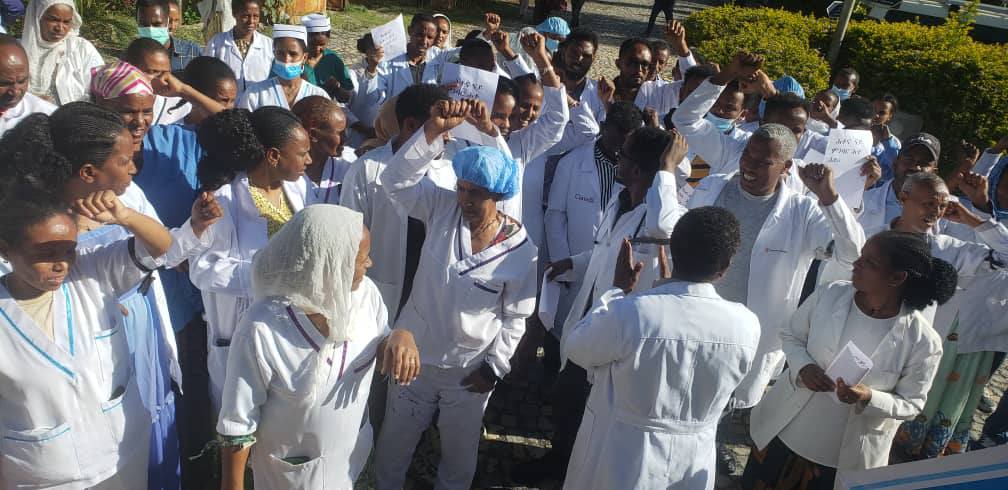
Health professionals across Tigray have staged peaceful demonstrations, demanding the payment of their salaries, which have remained unpaid for the past 17 months—during the (2020-2022) war period. The protesters, including healthcare workers in Maychew, Abi Adi, Shire, Mekelle, Adigrat and Adwa, called for urgent action, warning that they will cease work within 10 days if their demands continue to be ignored.
Despite ensuring that service delivery was not disrupted, the protesters made their voices heard loud and clear. “We want to be saved while saving the lives of our people,” they declared, emphasizing the need for immediate payment of salary arrears and the protection of their benefits.
If their demands remain unanswered, they have vowed to halt their work within 10 days and appeal to the international community for intervention.
The healthcare workers also called on the Tigray Health Bureau, the Tigray Interim Administration, and other relevant authorities to address their urgent grievances, according to a report from the Maychew City Communication Affairs Office.
In related news, healthcare professionals across Ethiopia have voiced similar concerns, stressing that their current salaries are insufficient to meet their basic monthly expenses.
Many public health specialists warn that continued salary delays may lead to an exodus of healthcare workers. ‘If this issue persists, Ethiopia could face a severe shortage of trained medical personnel, resulting in critical gaps in health service delivery,’ one expert stated.
The peaceful demonstrations by healthcare workers nationwide do not signal rebellion, but rather a final plea from professionals who have given everything yet received nothing in return. If the government fails to address their long-standing demands by May 12, Ethiopia could face a nationwide strike of unprecedented scale and consequences.
For years, Ethiopian doctors, nurses, technicians, and other healthcare workers have endured severe hardships. They have faced harassment, imprisonment, threats, and even death. Their salaries are so inadequate that many rely on financial support from their families. Some healthcare workers have tragically died due to hunger, while others have been forced to beg in public.
This crisis does not only impact healthcare professionals—it threatens every Ethiopian who relies on an already fragile healthcare system.
The government must act immediately, wisely, and decisively. First, it must publicly acknowledge the legitimacy of the healthcare workers’ demands. Second, it must initiate urgent negotiations with representatives of the movement. Failure to act now could push Ethiopia’s healthcare system to the brink of collapse.
Leave a Reply
You must be logged in to post a comment.