
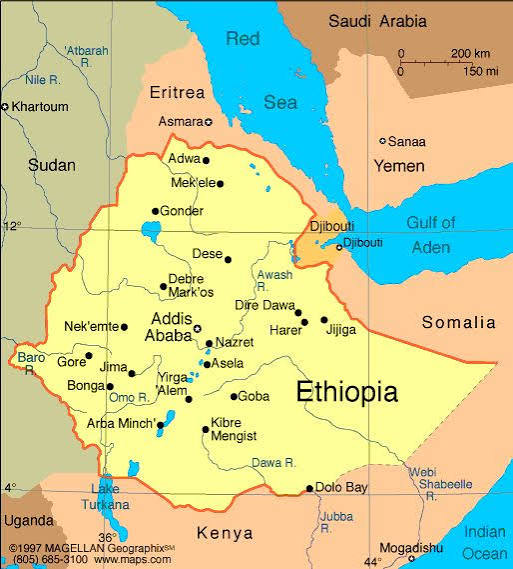
By Justice for the voiceless,
Ethiopia is on the brink of renewed conflict, and it is not accidental. The federal government and its allies appear to have deliberately chosen war against Tigray as a political strategy, driven by fear of losing power, collapsing legitimacy, economic crisis, and preparations for the 7th national general election scheduled for June 1, 2026 (Addis Standard, 2025). At the heart of this strategy lies a fatal miscalculation, the belief that Tigray is weak, isolated, and incapable of shaping events beyond its borders.
1. Political Exclusion and Repression
The government has systematically suppressed opposition and restricted democratic participation:
• The Tigray People’s Liberation Front (TPLF), a principal signatory of the Pretoria Peace Agreement, has been effectively banned from the upcoming elections (Addis Standard, 2025).
• Peaceful opposition leaders such as Lidetu Ayalew have been barred from returning, forced into exile, and had property confiscated (CPJ, 2024).
• Former State Minister Taye Dendea remains imprisoned, and Bate Urgessa, an OLF political officer, was brutally murdered, illustrating the lethal consequences of dissent (Addis Standard, 2025).
• Journalists critical of the government including Yayesew Shimelis, Meaza Mohamed, and Beqalu Alamirew , have been arrested, jailed, tortured, or forced into exile (CPJ, 2024).
By eliminating peaceful alternatives and silencing independent media, the government has narrowed democratic space, leaving armed resistance as the only outlet for political expression.
2. Siege, Blockade, and Cash-Flow Restrictions
Tigray has been subjected to a de facto siege since the regime took power deliberately designed to cripple daily life and economic activity:
• Only 7%the region’s monthly petroleum allocation is delivered.
• Federal government budget subsidies are stopped . Cash-flow restrictions imposed and Tigrayans are forced into limit daily withdrawals of their own money to 1,000 birr about ($6.45) outside Mekelle(the capital ) and 10,000 Birr about ($64.50)in Mekelle (Reuters, 2024).
• Food, medicine, and essential supplies remain severely restricted.
• Large parts of southern and western Tigray remain occupied, blocking the safe return of internally displaced persons (IDPs) (ReliefWeb, 2024).
Rather than weakening Tigray, these measures have intensified civilian suffering, strengthened local solidarity, and fueled international criticism (BBC, 2024).
3. Military Miscalculations and Proxy Failures
Despite superior manpower and air power, government forces have repeatedly suffered setbacks against TDF, Fano, and OLF units:
• Proxy forces such as Simret/TPF, composed of TPLF and TDF defectors, lack popular legitimacy and are widely seen as corrupt traitors(Addis Standard, 2025).
• Assumptions that Tigray is too weak to resist have proven false.
• Over reliance on international diplomatic credibility as a “reliable Western ally” obscures the potent local resistance and alliances among Tigray, Fano, OLF, Eritrea, Afar, and Sudan (Washington Post, 2024).
4. Rushed Elections and Legitimacy Erosion
The June 1, 2026 general election is being prepared without meaningful inclusion of Tigray, Fano, or OLF controlled territories (Addis Standard, 2025):
• Excluding TPLF undermines the credibility of the Pretoria Peace Agreement.
• Peaceful political parties continue to be banned, detained, or forced into exile.
• Attempts to erase Fano’s unity and reform movements risk further ethnic tension.
6. Regional Ambitions and International Pressures
The government’s strategy is influenced by regional and global politics:
• U.S. diplomatic pressure regarding the Grand Ethiopian Renaissance Dam (GERD) and Egypt’s Nile water interests heightens federal calculation (AFP, 2024).
• UAE alliances, including accusations of UAE’s support for harboring RSF forces led by Mohammed Dagalo, involvement in Somalia’s internal affairs has complicated Ethiopia’s regional standing (Reuters, 2024).
• Red Sea claims, including over Assab in Eritrea, risk international isolation (New York Times, 2024).
• Fragile ties with Sudan, Djibouti, and Somalia increase the likelihood of external involvement.
6. Threats to Sovereignty and the Risk of New Alliances
Aggressive federal posture threatens sovereignty and could provoke new coalitions:
• Concerns over sovereignty could unite Tigray, Fano, OLF, Eritrea, Afar, and Sudanese actors against federal overreach (Addis Standard, 2025).
• Such alliances could accelerate the collapse of government authority, deepen violence, and create a massive humanitarian crisis.
• The conflict could attract international actors on multiple fronts, turning a domestic dispute into a regional crisis.
7. Humanitarian, Ethnic, and Regional Consequences
Renewed war threatens catastrophic outcomes:
• Ethnic conflicts could erupt nationwide.
• Human rights abuses, deaths, and large-scale displacement would increase.
• Conditions conducive to extremism could undermine national and regional security.
• Millions could flee to neighboring countries and Europe, straining humanitarian and migration systems (BBC, 2024).
8. Peaceful Overtures and Calls for Dialogue
The Tigray Interim Administration authorities, TPLF, and TDF have consistently sought peaceful resolution:
• Full implementation of the Pretoria Peace Agreement.
• Recognition of sovereignty and safe return of IDPs.
• Inclusive dialogue to address unresolved issues (ReliefWeb, 2024).
Patience should not be mistaken for weakness; delays in engagement increase the likelihood of large-scale escalation.
9. Call to Action
International actors must act decisively:
1. Halt aggression and restore humanitarian access.
2. Return seized territories and enable safe return of IDPs.
3. Fully implement the Pretoria Peace Agreement.
4. Ensure inclusive political processes for Tigray, Fano, OLF, and other actors.
5. Hold all parties accountable for human rights violations.
10. Conclusion: Strategic Error with Global Stakes
Through siege, blockade, political repression, military miscalculation, and flawed electoral planning, the Ethiopian government and its allies risk:
• Strengthening opposition alliances.
• Prolonged conflict with humanitarian catastrophe.
• Internationalization of the crisis, threatening stability in the Horn of Africa and beyond.
Force may offer short-term control, but genuine negotiation, respect for human rights, and inclusive democracy are the only sustainable path to peace.
References
Addis Standard. (2025). HRW warns surge in journalist arrests threatens press freedom ahead of 2026 elections.
https://addisstandard.com/hrw-warns-surge-in-journalist-arrests-threatens-press-freedom-ahead-of-2026-elections/
AllAfrica. (2026). Ethiopia: Political parties in Tigray question readiness for elections amid unimplemented Pretoria accord.
https://allafrica.com/stories/202601230010.html
Committee to Protect Journalists (CPJ). (2024, June). Fleeing prolonged media crackdown, Ethiopian journalists struggle in exile.
Fleeing prolonged media crackdown, Ethiopian journalists struggle in exile
Committee to Protect Journalists (CPJ). (2025). ‘Stop filming or I will shoot’: Ethiopian journalists targeted amid turmoil.
‘Stop filming, or I will shoot’: Ethiopian journalists targeted in Tigray turmoil
The Reporter (Ethiopia). (2025). Opposition parties raise concerns over security and political space ahead of elections.
PBS NewsHour. (2022). Ethiopian government and Tigray forces agree to end fighting after two years of war.
https://www.pbs.org/newshour/world/ethiopian-government-tigray-agree-to-end-fighting-after-2-years-of-conflict
Leave a Reply
You must be logged in to post a comment.