
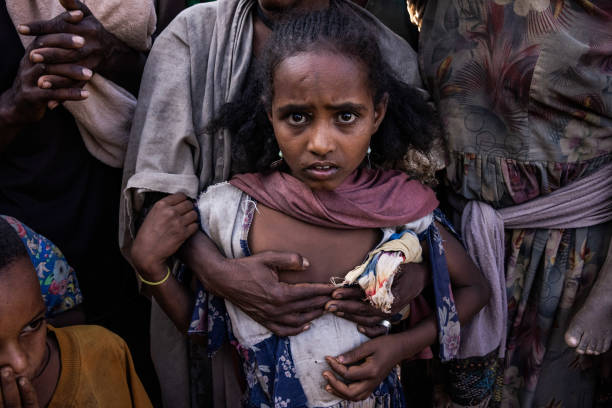
The United Nations World Food Programme (WFP) has cautioned that more than ten million people in Ethiopia are currently facing increasing hunger and malnutrition. The agency has issued a statement warning that it will cease providing life-saving food aid to 3.6 million individuals in the upcoming weeks unless it promptly secures additional funding for its operations in Ethiopia.
The World Food Programme, a United Nations agency focused on food security, expressed apprehension about the escalating levels of hunger and malnutrition in Ethiopia in a statement released on Tuesday, April 22, 2025.
The agency attributed the increasing levels of hunger and malnutrition in Ethiopia to a variety of issues within the country. Conflict, regional instability, and displacement were cited as contributing factors. Additionally, Ethiopia’s economic crisis and drought were mentioned as key factors leading to the worsening hunger and malnutrition. As a result, millions of people are now without sufficient food, according to the World Food Programme.
The organization’s statement disclosed that more than ten million individuals throughout Ethiopia are now at risk of experiencing hunger and food insecurity. It highlighted that approximately three million of these individuals have been forcibly displaced from their homes due to conflict and severe weather conditions.
The World Food Programme has described the level of malnutrition in Ethiopia as “alarming,” emphasizing that 4.4 million pregnant and lactating mothers and children are in need of malnutrition treatment.
According to the World Health Organization, if 15 percent of children in an area are malnourished, the situation is considered an “emergency.” The World Food Program (WFP) reported that the number of severely malnourished children in some areas of Somali, Oromia, Tigray, and Afar regions has exceeded the 15 percent threshold set by the World Health Organization to be considered an “emergency.”
The statement also warned that the Somali region, where this issue has been observed, is facing another drought threat due to expected “low rainfall” in May. It highlighted that families in the Somali region are “still suffering” from the “longest drought in the country’s history” from 2020 to 2023.
The World Food Programme (WFP) announced it had provided food assistance to more than three million people in the first quarter of 2025, with 80 percent of that assistance delivered to “displaced and severely food insecure” Ethiopians.
However, the agency said it faced two challenges in its operations in Ethiopia. The primary challenge, according to the statement, was access. “Violence and security concerns” in the Amhara region have hampered the agency’s humanitarian operations in the region, putting at risk its ability to reach half a million people.
The second challenge that the agency faces is funding. The World Food Programme (WFP) stated that it is currently facing a $222 million shortfall in funding for its operations in Ethiopia from April to September next year. The statement emphasized that the agency’s life-saving assistance is being severely hampered by this critical funding shortfall.
The agency warned that “without urgent new funding, 3.6 million of the most vulnerable people in Ethiopia will lose their life-saving and nutritional support from the World Food Programme in the coming weeks.”
Additionally, the WFP mentioned that it had to “suspend treatment for 650,000 women and children affected by malnutrition in May” due to the funding shortfall. The agency had planned to provide life-saving food to two million mothers and children this year.
Leave a Reply
You must be logged in to post a comment.